| Cutworms, Armyworms, Whistling Moths, Underwings NOCTUOIDEA |  | (donherbisonevans@yahoo.com) and Stella Crossley |
|
|
| Cutworms, Armyworms, Whistling Moths, Underwings NOCTUOIDEA | | (donherbisonevans@yahoo.com) and Stella Crossley |
|
NOCTUIDAE has approximately 500 named Australian species, here listed in the subfamilies of NOCTUIDAE :-
80 species 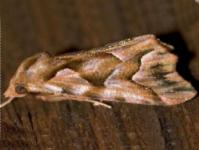
| 143 species 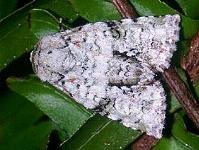
| 42 species 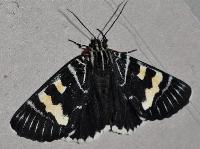
| 5 species 
|
1 species 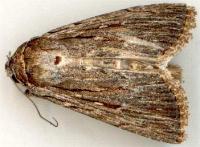
| 1 species 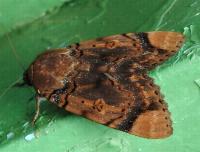
| 62 species 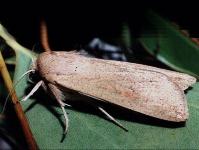
| 42 species 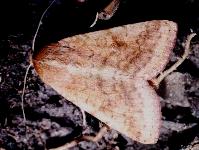
|
33 species 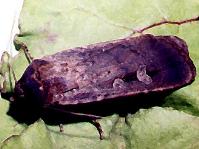
| 16 species 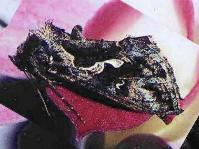
| 2 species 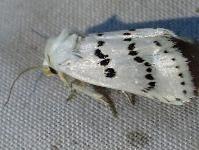
|
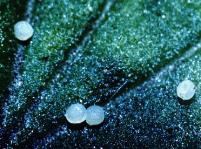
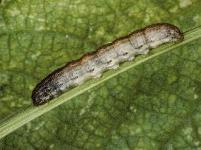
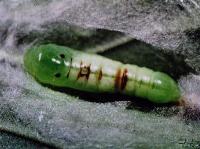
The Caterpillars of NOCTUIDAE are usually smooth, lacking obvious hairs. Their bodies are often green, brown or yellow, and striped longitudinally.
Most species of NOCTUIDAE pupate in the soil, although a few pupate in a sparse cocoon under a leaf of their foodplant.
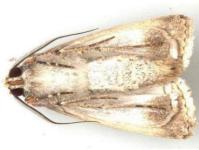
The adults mainly fly at night, feeding on nectar from flowers. Their nocturnal habits gave the family its latin name. Some of the adults have metallic-looking markings on their wings. but most have dull coloured wings.
Note that although the Checklist of Australian Lepidoptera includes the subfamilies NOLINAE , CHLOEPHORINAE , and SARROTHRIPINAE in NOCTUIDAE , we are following the more recent book A Guide to Australian Moths so here we list these subfamilies in NOLIDAE.
 family | 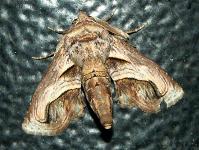 NOCTUOIDEA family |  butterflies |  Lepidoptera |  moths |  NOCTUOIDEA family |  family |
(updated 31 May 2014, 24 February 2025)