
| (formerly known as Curicta oppositalis) CHRYSAUGINAE, PYRALIDAE, PYRALOIDEA | (donherbisonevans@yahoo.com) and Stella Crossley |

Photo: courtesy of Buck Richardson, from
Tropical Queensland Wildlife from Dusk to Dawn Science and Art
|
| (formerly known as Curicta oppositalis) CHRYSAUGINAE, PYRALIDAE, PYRALOIDEA | (donherbisonevans@yahoo.com) and Stella Crossley |
Photo: courtesy of Buck Richardson, from
Tropical Queensland Wildlife from Dusk to Dawn Science and Art
The forewings of the adult of this species are green, each with a grey band along the margin. The forewings each have a recurved costa, and two recurves in the margin. The hindwings are orange. The moths has a wingspan of about 3.5 cms.

The species occurs in
and in Australia in
In the Checklist of Australian Lepidoptera this species was put in PYRALINAE, but here following Solis & Schaffer we put it in CHRYSAUGINAE.
Further reading :
Buck Richardson,
Tropical Queensland Wildlife from Dusk to Dawn Science and Art,
LeapFrogOz, Kuranda, 2015, p. 189.
Pieter Cornelius Tobias Snellen,
Description de deux espèces inédites,
Tijdschrift voor Entomologie,
Volume 37 (1893-94), pp. 74-75, and also
Plate 3, fig. 5.
Maria Alma Solis & Michael Shaffer,
Contribution towards the study of the Pyralinae (Pyralidae):
Historical review, morphology, and nomenclature,
Journal of the Lepidopterists' Society,
Volume 53 (1999), pp. 1-10.
Francis Walker,
Catalogue of Lepidoptera Heterocera,
List of the Specimens of Lepidopterous Insects in the Collection of the British Museum,
Part 34 (1866), p. 1130.
 caterpillar |  butterflies | 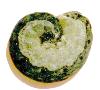 Lepidoptera |  moths |  caterpillar |
(written 22 March 2015, updated 12 April 2019, 20 November 2021)