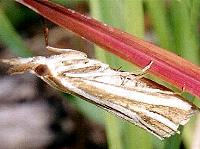
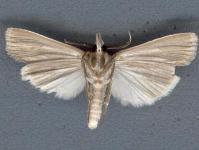
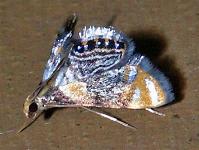
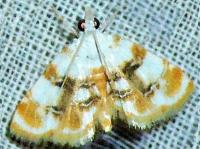
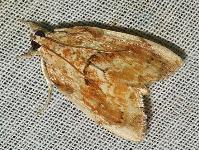
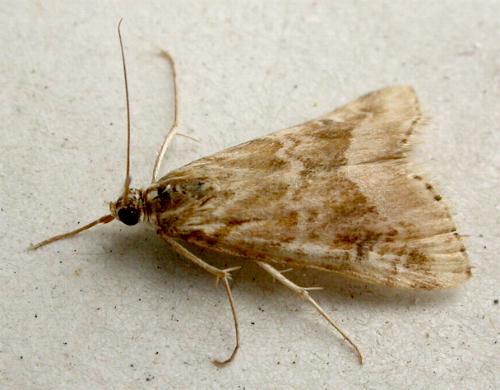
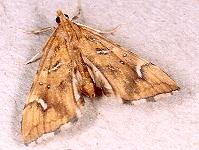
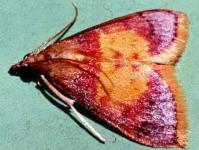
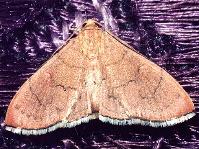
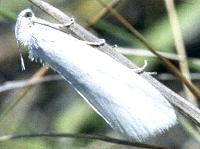
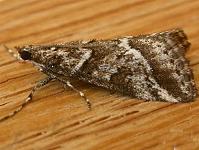
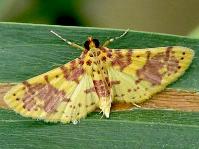
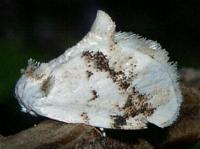
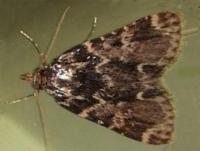
The 743 named and described species in CRAMBIDAE
in Australia are here divided up and listed in their 14 subfamilies :-
The CRAMBIDAE were originally included in the family
PYRALIDAE,
and were first separated out
as a distinct group by Munroe in 1972 based on
the presence or absence of an organ called the praecinctorium,
which when present is a bilobed flimsy structure lying on the
mid-line between medially fused tympanic bullae.
When absent, the tympanic bullae are quite clearly separated.
The former are the Crambiformes, the latter the Pyraliformes.
Later, the separate groups were elevated to family status,
particularly by Hennig.
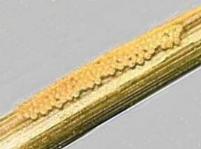
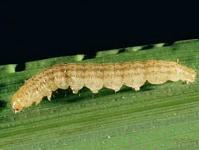
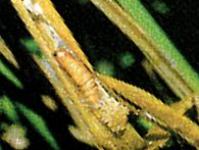
The Caterpillars of CRAMBIDAE are very varied in their habits.
They are basically a group of concealed feeders, but they also include
parasites and aquatic forms.
A key to the caterpillars of pest species in this family has been published.
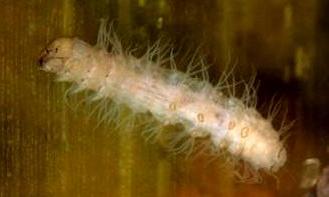
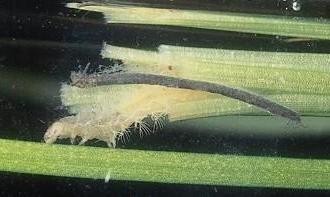
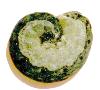
Aquatic caterpillars, probably from the subfamily
ACENTROPINAE
(Photos: from
The Waterbug Book,
courtesy of Edward Tsyrlin and John Gooderham, Butterfly Adventures,
Melbourne)
(updated 31 May 2014, 11 March 2023)